
Supplier questionnaires: proving EUDR readiness before the first plot lands
Before geometry and satellite scores, ask the right questions. A structured supplier questionnaire is how you see — at day zero — whether a counterpart can support deforestation-free, legality-backed supply.

On this page
Most EUDR programmes start with maps. That is necessary — but it is not sufficient, and it is often not the cheapest place to learn that a supplier cannot support a negligible-risk conclusion. A structured questionnaire lets you evaluate the counterpart itself: land legality, labour and human-rights controls, mixing risk, document discipline — in language your sustainability team already trusts.
The regulation requires operators to exercise due diligence before placing relevant commodities on the market. Collecting supplier self-declarations and supporting evidence is part of that exercise, not a substitute for geolocation — see the consolidated EUDR text on EUR-Lex and the Commission’s implementation materials.
Why questionnaires belong at the start of supplier evaluation
At day zero you often have a name, a country, and a commercial intent — not a clean GeoJSON. Questionnaires turn that intent into a scored readiness picture: can this supplier answer legality questions with documents, or does every reply open a gap? That signal is cheaper to act on before you commission risk runs across hundreds of hectares.
- Readiness visibility — see whether the supplier is prepared for EUDR evidence demands before the first process.
- Your questions, your weights — sustainability and compliance teams define sections that match your commodity and risk appetite.
- Dynamic format — publish once, reuse across suppliers, revise when guidance or your policy changes.
- Audit trail — answers, risk levels and mitigation owners stay attached to the supplier record.
What a useful EUDR questionnaire actually asks
Generic ESG surveys rarely map to Article 3 legality or the information operators must collect. A focused template typically covers land tenure and production legality, indigenous and labour rights where relevant, mixing and traceability controls, and the documents you will need later in the due diligence statement file. Per-answer risk weights turn “yes/no” into a signal your mitigation workflow can act on.
Not a substitute for geolocation
Questionnaires do not replace plot geometry or deforestation analysis. They tell you whether the supplier can participate in that analysis honestly — and where to dig before you file.
Build the form around your sustainability unit’s questions
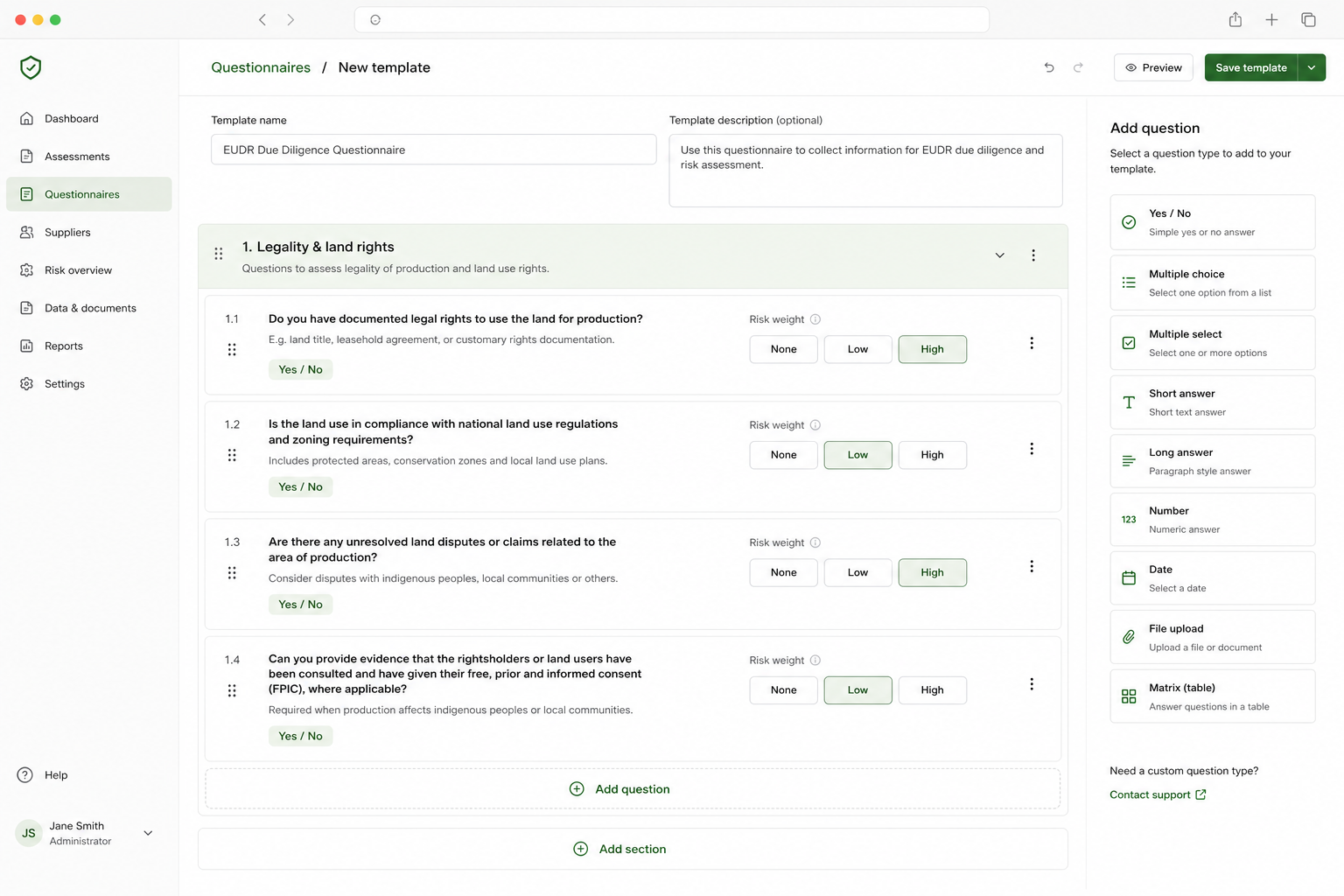
In ERWAY, the questionnaire builder lets compliance teams compose sections and question types — single choice, multiple choice, yes/no, free text, date, document — and attach a risk weight to each answer. The result is a living template, not a one-off Word file emailed into oblivion.
Send a secure link — no supplier login required
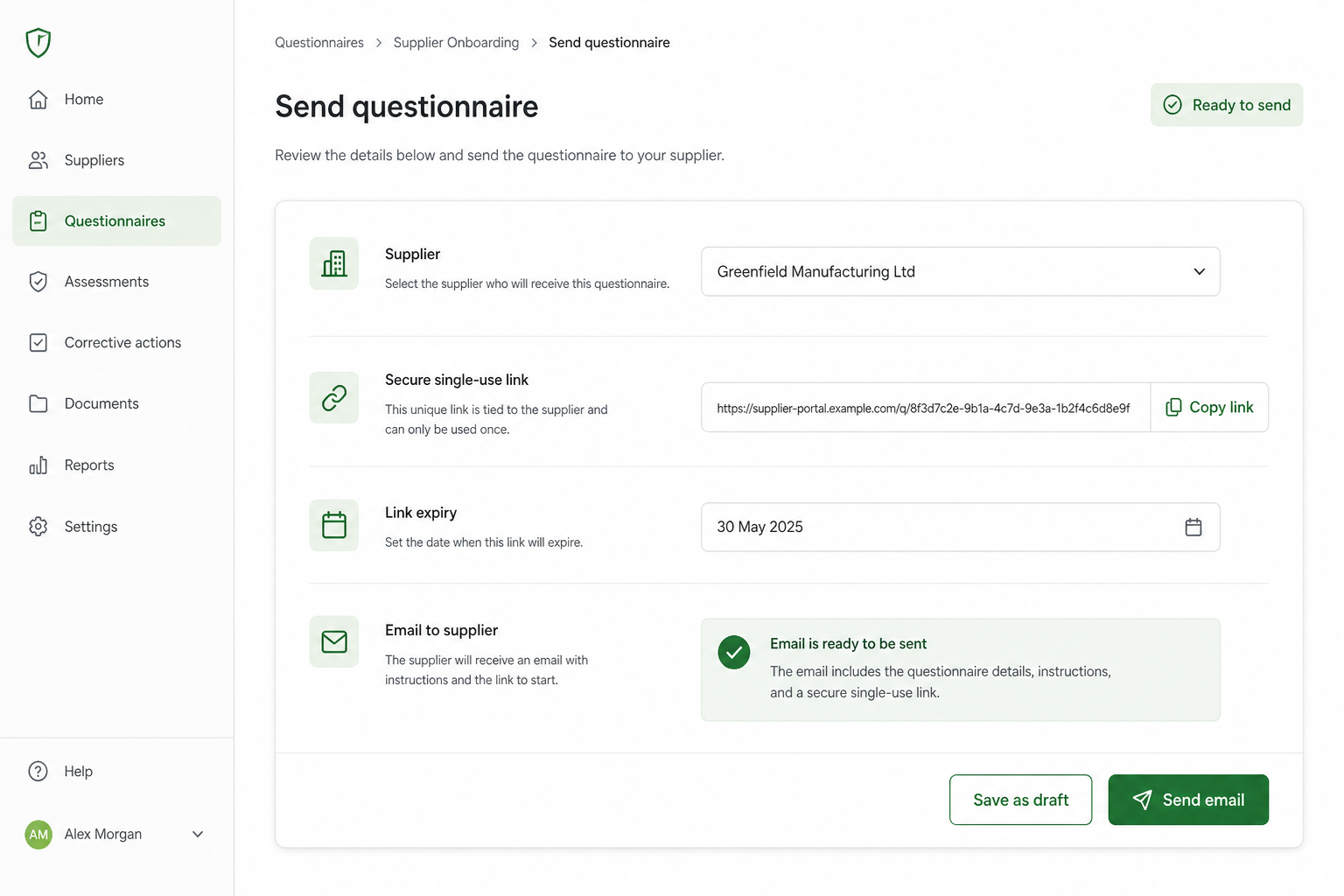
Published templates are assigned to a supplier with an expiry. ERWAY emails a secure single-use link so the counterpart can respond without an account. That keeps friction low for smallholders and trading houses alike, while leaving a clear assignment record on your side.
Score risk, then export the PDF
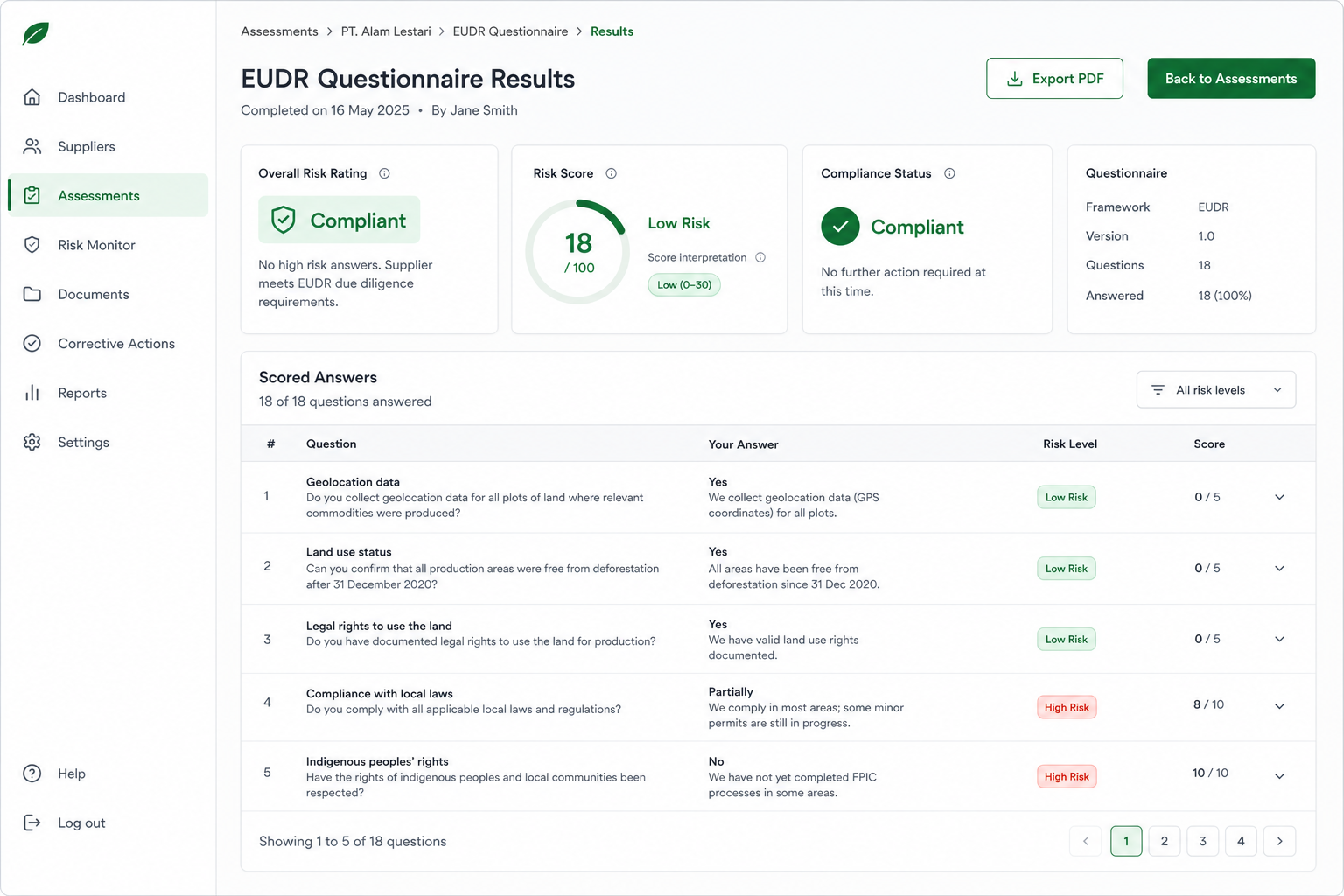
Responses land with an automatic risk level per answer. High-risk replies can carry mitigation actions with an owner and deadline. When the file is ready, export a PDF dossier — the same evidence trail you will want beside deforestation results and the eventual due diligence statement.
Bottom line
If you only discover a supplier cannot evidence legality after satellite risk has already run, you have paid for the wrong lesson. Questionnaires put evaluation at the first mile: your questions, your risk model, a scored response, and a PDF you can keep for the statutory retention period. That is how supplier assessment becomes part of EUDR due diligence — not a side spreadsheet.
Primary sources
- 1.
- 2.
- 3.
Published · Last reviewed against the sources listed above.
Orhan Khempton
Compliance Manager
I work the operational side — supplier questionnaires, risk assessment and the commodity guides — so what publishes matches what a compliance team actually has to do.
EUDR glossary
Read next
Risk assessment and mitigation: building an evidence file that holds up
What EUDR risk assessment has to cover, what 'negligible risk' and 'substantiated concern' mean in practice, and how to document mitigation so it survives a competent authority check.
6 min read
EUDR in plain terms: what Regulation (EU) 2023/1115 actually requires
The EUDR's scope, the three conditions every product must meet, the 31 December 2020 cut-off, and what due diligence actually consists of.
6 min read
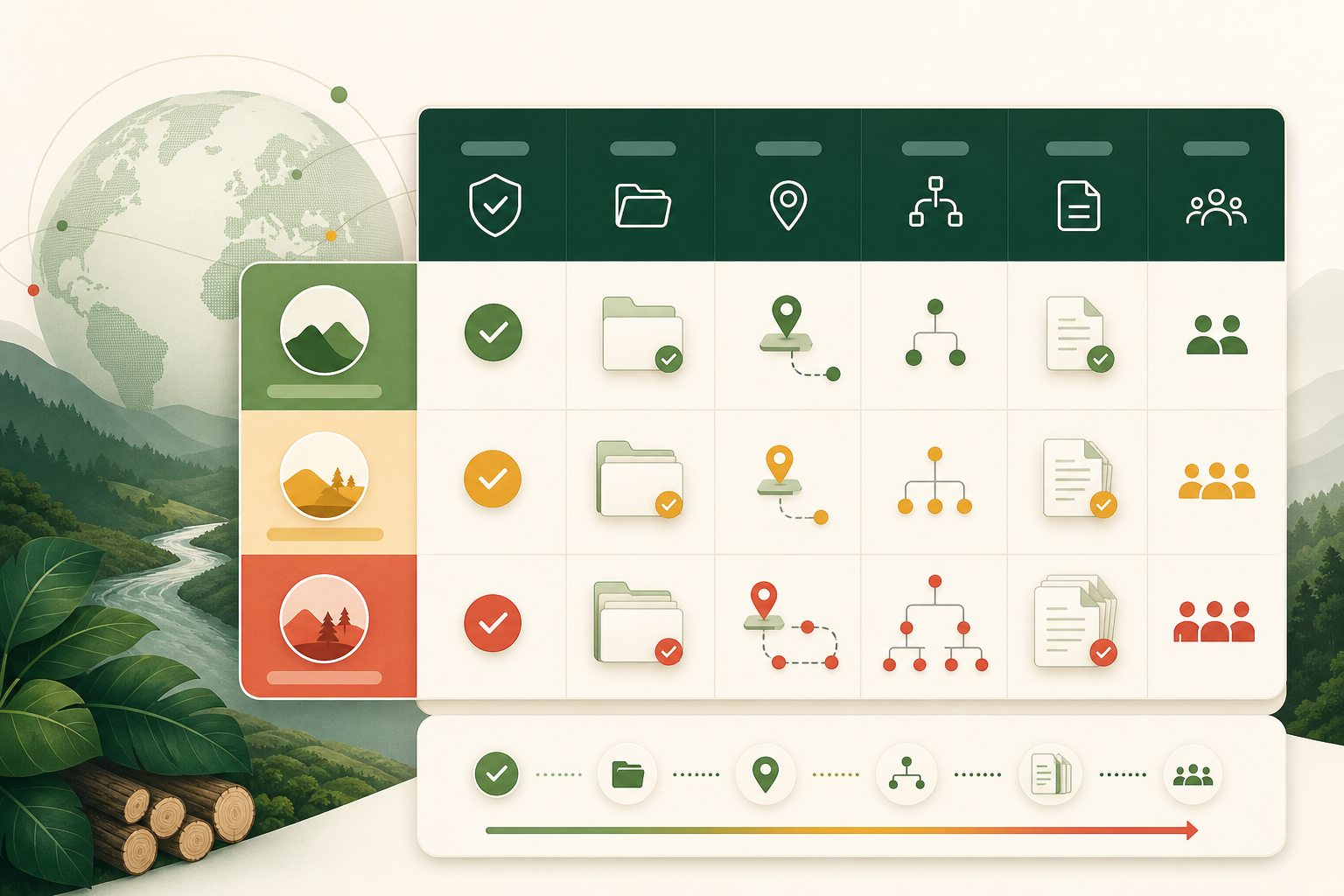
EUDR country risk classification: which obligations change, tier by tier
A complete tier-by-tier comparison of EUDR obligations: information collection, due diligence systems, risk assessment, mitigation, mixing rules, substantiated concerns and authority check rates.
6 min read