
The Due Diligence Statement and the EU Information System, end to end
The statement is the small, visible part of a large, invisible exercise. It is also a formal declaration of legal responsibility — which is worth understanding before you submit a few thousand of them.
On this page
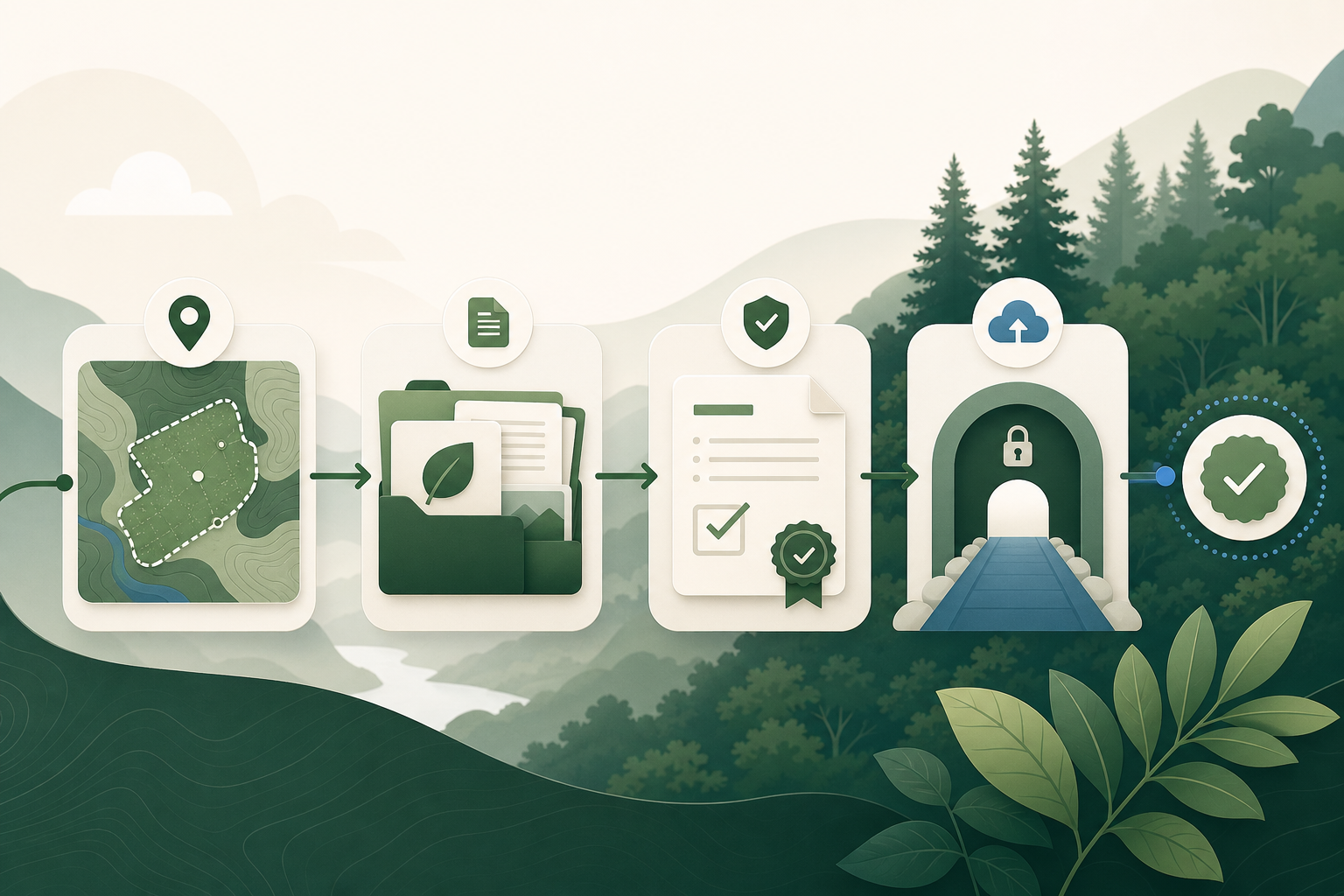
Everything else in the EUDR is preparation for one act: submitting a due diligence statement. It is a short document, it takes a few moments to file, and it is the point at which a large amount of evidence becomes a legal assertion by a named person in your organisation.
That last part is worth dwelling on before the mechanics, because it is easy to lose in the discussion of file formats. By submitting, the operator assumes responsibility for the compliance of the product. It is not a data upload. It is a declaration.
What goes into a statement
The content is prescribed rather than open-ended. In substance a statement carries:
- Who the operator is, including EORI where relevant.
- What the products are, by customs classification code, with description and quantity.
- The country of production.
- The geolocation of all plots where the commodity was produced, with the date or time range of production.
- A declaration that due diligence was carried out and that no more than negligible risk was found.
The geolocation is the part that carries the weight and the part that most often fails. Everything else in that list already exists somewhere in a normal import process; plot coordinates generally do not.
The evidence does not go in
You do not upload your risk assessment, your imagery or your supplier correspondence. That stays with you, for five years, ready to be produced on request. A thin submission is normal; a thin file behind it is not.
The reference number
A successful submission returns a reference number. Since the 2025 amendment moved the filing obligation to the party first placing goods on the market, that number has become the connective tissue of the whole regime.
It is quoted in the customs declaration, so goods can be linked to the statement covering them. It is passed to downstream operators and traders, who retain it rather than filing again. And it is what an authority will use to pull your file.
The practical consequence is that reference numbers have to be handled as first-class supply chain data — attached to consignments, surviving splitting and consolidation, and retrievable years later. Most ERP configurations have nowhere obvious to put one, and a free-text comment field is not a place you can query under time pressure.
The 2026 rebuild
Access to the Information System was restricted from mid-February 2026 while it was reworked to carry the amended regulation, with a staged reopening from June. It was a substantial change rather than maintenance.
| Capability | Why it matters |
|---|---|
| Registration for the new roles | Downstream operators and non-SME traders register without filing statements. |
| Simplified declarations | The lighter submission route for micro and small primary operators in low-risk countries. |
| Fuller API integration | Programmatic submission, which is the only workable route at any real volume. |
| Voluntary grouping of reference numbers | Bundling references, which eases the many-to-many problem in consolidated shipments. |
| Contingency procedures | A defined path when the system is unavailable rather than an unplanned halt. |
What the rebuild added
By hand or by API
For a handful of consignments a year, the web interface is fine. Beyond that it stops being viable quickly — not because typing is slow, but because manual submission means your statement content is assembled by a person from several systems, and that is where inconsistencies enter.
The case for integrating early is not throughput. It is that the integration forces you to discover, months before the deadline, that your plot data does not fit the expected structure — a discovery that is cheap in September and very expensive in late December.
Submission is not the moment to find out about your data
The most common late failure is not a rejected statement. It is discovering at submission that plot geometry was never linked to consignments in the first place, only to suppliers — and that the link the statement requires does not exist anywhere in your systems.
Where customs fits
The statement and the customs declaration are separate acts that have to line up. When relevant products are declared for release for free circulation or for export, the reference number of the due diligence statement is quoted in the customs declaration, and customs authorities can hold goods where that link is missing or does not resolve.
The consequence for planning is that filing is not a back-office task that can happen at month end. It sits on the critical path of the shipment, and it has to complete before the goods can clear. Any process that assembles plot data manually, per consignment, becomes a bottleneck at the border rather than an administrative inconvenience.
Re-imports are handled as downstream activity
Goods that were previously placed on the EU market, exported, and then brought back are treated as downstream activity where the earlier placing and its due diligence can be evidenced, rather than requiring the whole exercise to be repeated. Guidance describes a conventional reference to be used in the customs declaration for these cases.
Timing, and getting it wrong
The statement is submitted before placing on the market or export, not after. Filing retrospectively to cover goods already released does not repair the position — the obligation was to have done the diligence first, and the timestamp records whether you did.
If something later proves incorrect, the answer is to act on it rather than to leave it: correct the record, and where non-compliance is established, take the steps the regulation requires and inform the competent authority. A statement that is known to be wrong and left standing is a considerably worse position than one that was corrected.
What to do before December
Register now
Registration is administrative and can be done long before you file anything. It is also a dependency for everything else.
Submit test statements against real data
Not sample data. Real plots from a real supplier, which is what exposes structural problems.
Decide where the reference number lives
A queryable field on the consignment, before the first live submission rather than after the hundredth.
Name who signs
Submission is a declaration of responsibility. Someone in your organisation is making it, and they should know that before they do.
When the system is unavailable
Any process with a hard dependency on an external system needs an answer for the day that system is not there, and the rebuild added defined contingency procedures for exactly that. It is worth knowing what they are before you need them, because the alternative is an unplanned halt at the border with no agreed fallback.
The same applies to your own side of the integration. A submission pipeline that fails silently — queuing statements that never actually reach the system — is worse than one that fails loudly, because goods keep moving on the assumption that filing happened. Alerting on unacknowledged submissions is not optional at volume.
The statement itself is genuinely straightforward. If filing feels hard, the difficulty is almost never in the form — it is that the form asks for a link between goods and land that the supply chain was never built to maintain.
Primary sources
- 1.
- 2.EUR-LexRegulation (EU) 2025/2650 amending the EUDR as regards its date of applicationRegulation
Retrieved
- 3.
- 4.
Published · Updated · Last reviewed against the sources listed above.
Orhan Khempton
Compliance Manager
I work the operational side — supplier questionnaires, risk assessment and the commodity guides — so what publishes matches what a compliance team actually has to do.
Read next
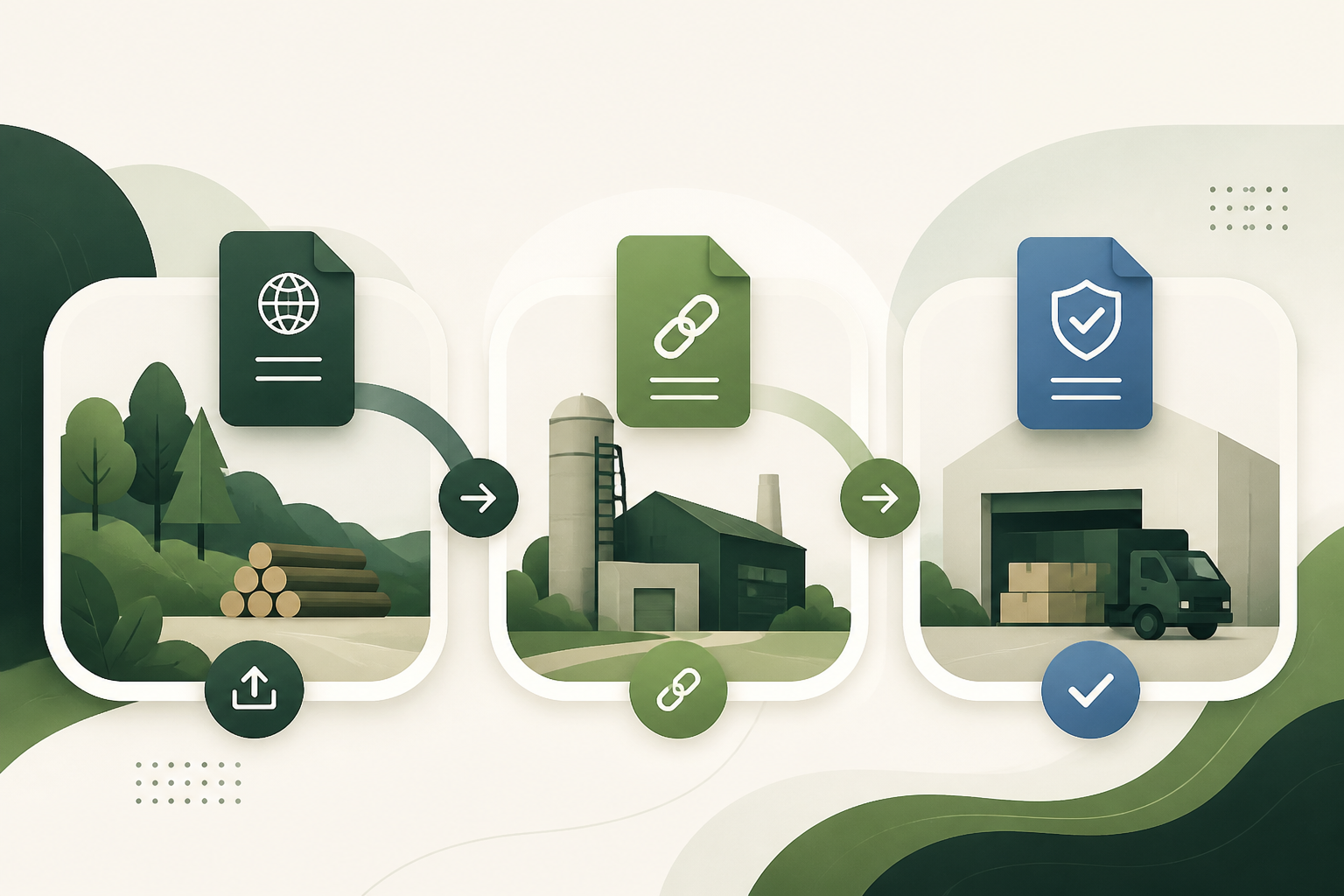
Operator, downstream operator, trader: who files what
How EUDR roles work after Regulation (EU) 2025/2650: who submits a due diligence statement, who retains reference numbers, and who registers without filing.
6 min read
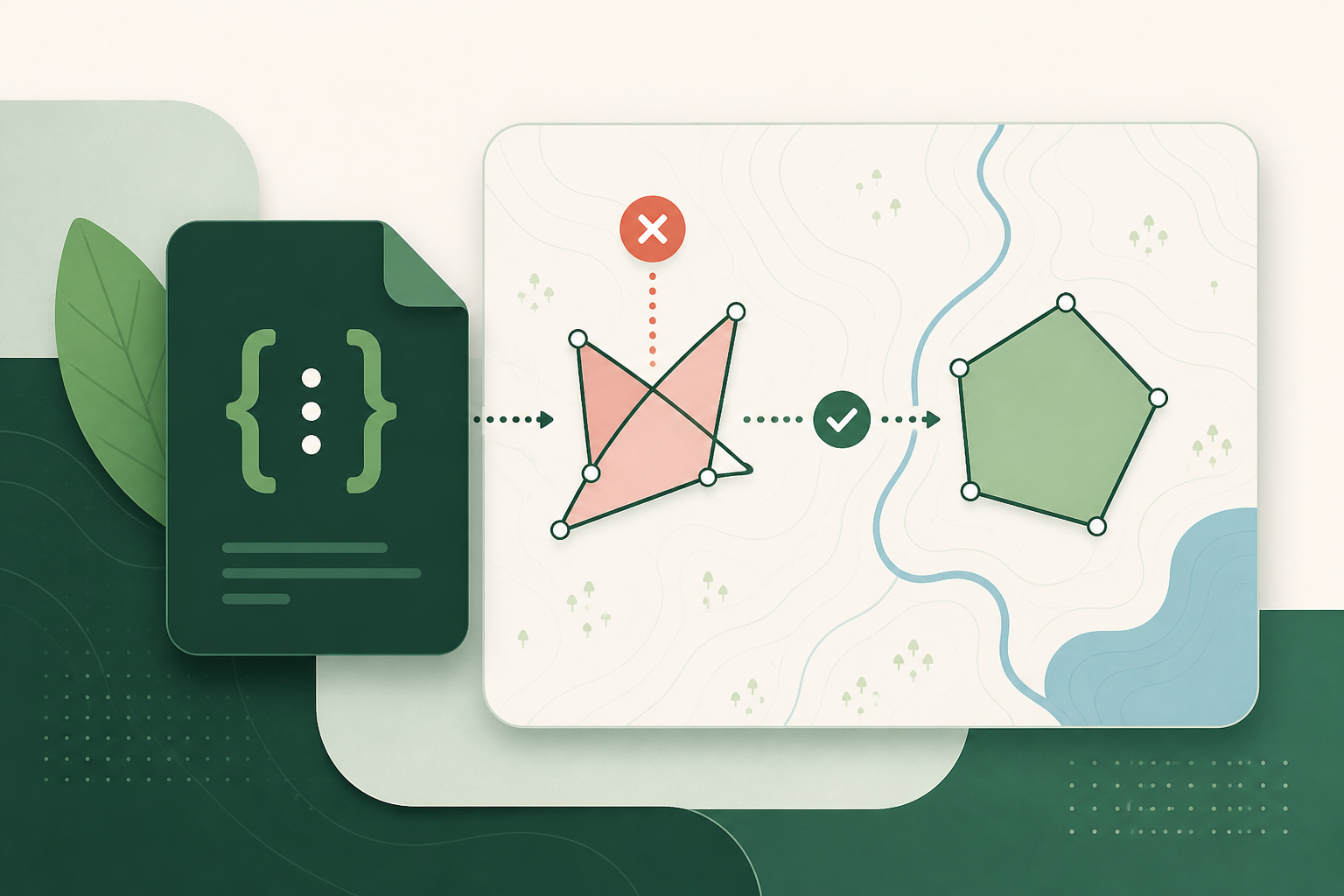
GeoJSON that passes: the geometry errors that bounce a statement
The geometry and file errors that cause EUDR plot data to fail validation, why each one happens, and how to catch them while they are still cheap to fix.
5 min read

Penalties under Article 25: what non-compliance actually costs
The EUDR penalty regime: fines of at least 4% of EU turnover, confiscation of products and revenues, procurement exclusion, market bans, and the criminal liability layer.
5 min read